

I was on a photoshoot for the zine (preview, coming next week—I promise this time!), when a friend asked what Treehouse was all about, and I gave the usual line about exploring themes of home. You know, the little blurb that stole your heart while you were entering your email address to join up here.
The only issue is that this photoshoot was about leftover pie1 and it was taking place on a beach, without a structure or shelter in any of the photos. So, what is it? It’s not actually *home* we’re doing here, I think, on further reflection, it’s *living*. Ref to Martha, always, always intended. It keeps changing, but I adjusted the little phrasing that I use when reaching out to people for this project to something like this:
Treehouse is an exploration of living with creativity; and the people, projects, techniques, and world-building that make meaningful environments.
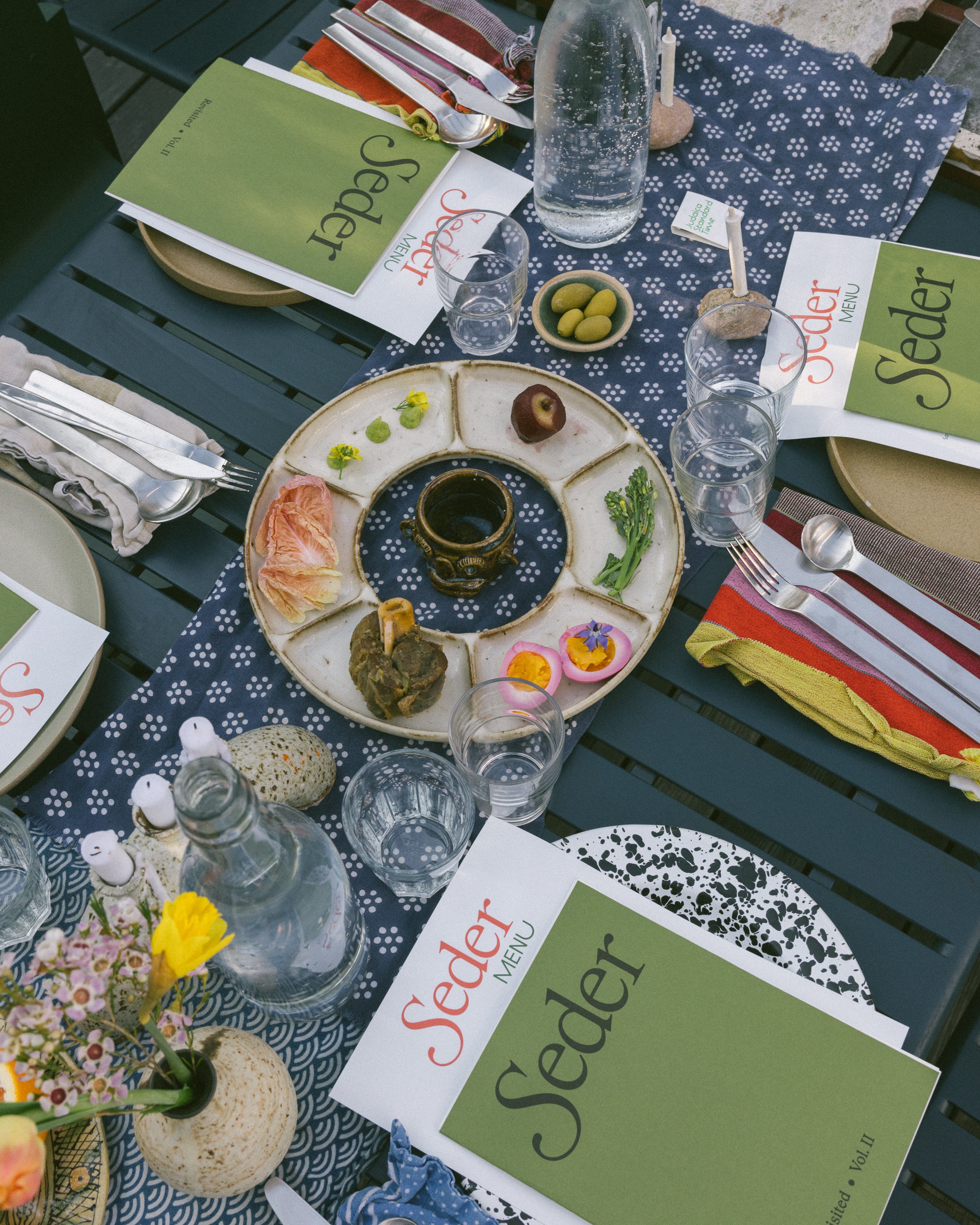
Tonight is the second night of Passover, which I know because my partner, Jesse Kivel keeps me apprised of these things. In fact, he has a nice lil judaica company Judaica Standard Time, which he runs with friends David Kitz (whose photography appears in the zine, did I mention the zine?) and Michael David.
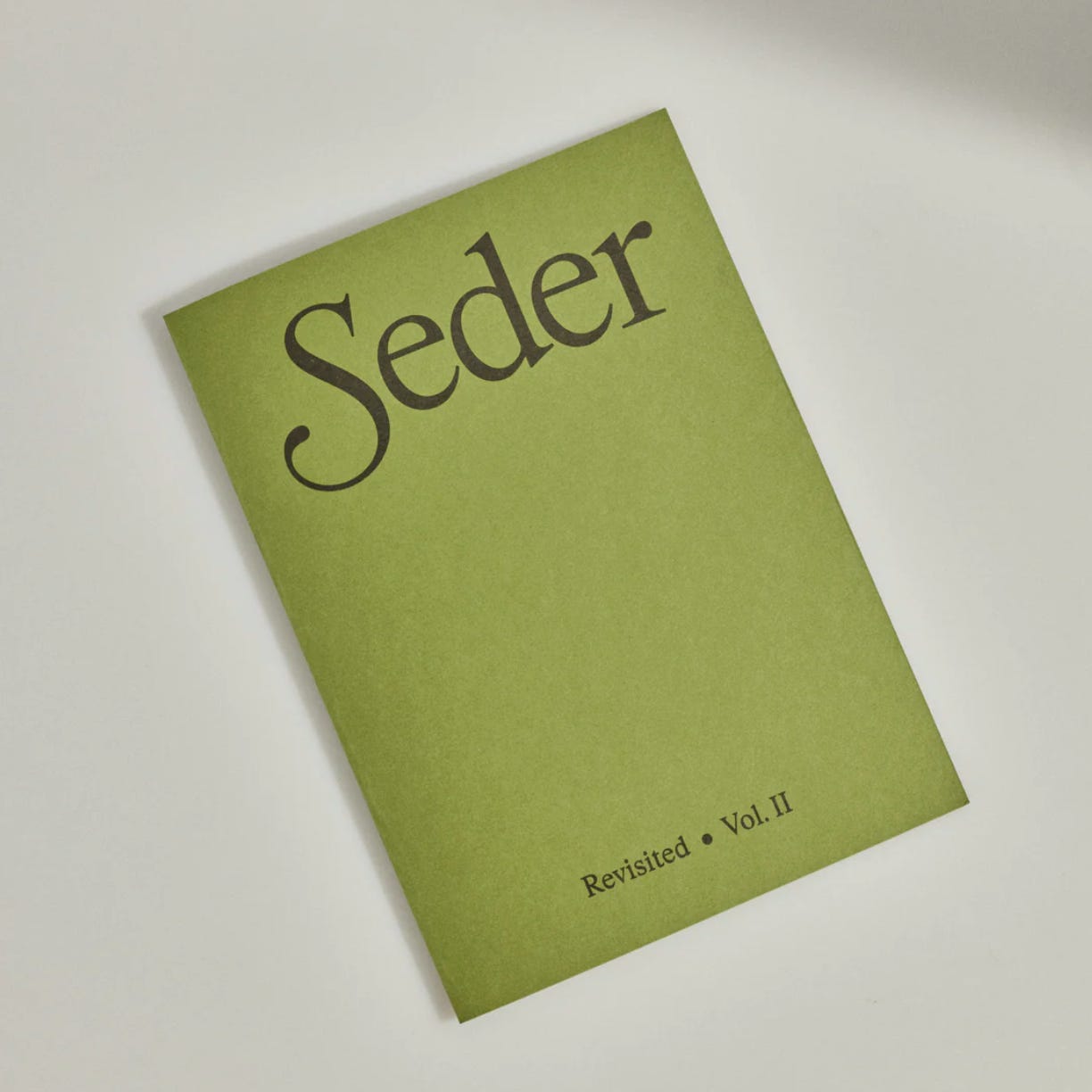
I was mindlessly scrolling, procrastinating today’s newsletter that was supposed to be an issue preview, and came across a description of the Haggadah that they, with Ruby Zuckerman, have put together for the holiday and it occurred to me—the pious path is usually/typically/STEREOtypically the opposite of what I’m interested in. Prescriptive living. But this feels so different—it’s reverent, but it’s thoughtful, meaningful, resonant. And so I asked them here to answer a few questions. Chag Semeach, friends.
Part of what I’m interested in here is, sort of, the creation of meaning in and around your life and especially your home environment. Obviously, the things you’re creating are intrinsically objects of meaning—so, why did you feel it was important to re-contextualize them?
We want to create a better alignment between those traditional objects and the everyday objects people normally use at home. The idea being that if a piece of Judaica could be displayed year round, and not simply hidden away in a bin until next Passover, you would think of it more and think of your culture more regularly, in a way that might feel truly connected to your everyday life.

What interests you about tradition? Why do you think it’s important to incorporate older customs into the present, even if you aren’t necessarily living a “traditional life”?
I (Jesse) personally feel some traditions are more in tune with the foundational rhythms of human life: A respect for the seasons, community, mortality. All of the big questions were tackled and addressed for centuries. In the modern world, everything is so fractured, remote, and disconnected, with a goal of leaving the individual "unburdened" by traditions in order to decrease efficiency and increase productivity. Rituals, like a Seder or Shabbat, put you into the physical world and allow you to be a follower, thinker, and reflector.
The Haggadah you released ahead of this year’s Passover has plenty of non-traditional elements, the olive leaf, for example. It would be great to hear about those choices for the text and what felt important to include and/or add on to the usual path of the Seder.
Ruby, who wrote our new Haggadah, made selections and wrote words that are beautiful and poignant. There’s a reflection on persecution, enslavement, and how many people in this world continue to not be free. I think we tweaked the text here to make it more universal. A bit less about us and our enslavement thousands of years ago, but a broader meditation on bondage and how this generational trauma can help us cultivate empathy for others who continue to be in a state of persecution.
Lastly—I think the antithesis of what interests me personally, and within the context of this newsletter, is following a certain path or lifestyle, like a zombie, without any intention, choice, or creativity. And to be honest, the pious path is typically/stereotypically be quite prescriptive. So, how or why do you think a life lived creatively or differently can pull in or learn from the divine?
I think life is about balance. I think sometimes you need to give yourself over to something, even if it is only for a little bit; to follow a path or ritual, instead of needing to control all of your own outcomes, and your own creations. Plus, religion is not afraid to think about death. It takes a crack at the big questions and puts you in a space from time to time that you might not go to otherwise.
Listings
I recently discovered a 1stDibs seller who has incredible antique doors! A lot of dreamy reclaimed, stripped pine in here. (LINK)
LOOK at this amazing chartreuse sectional! (LINK)
Let’s explore living in triangles! Like this peachy A-Frame in Florida (LINK); this one in Arkansas has a Greek-y blue roof (LINK); knotty pine and lakeside in Wisconsin (LINK); extra fancy and expensive in, you know, New York (LINK).
As ever, if you have a listing to share—an announcement, something you’re selling, something you’re working on and need community support on—feel free to reply to this email and we’ll start drafting your Listing.
Notes
Already yammered too much about zine stuff earlier and a full preview will come next week! See you then!
Guys, the zine is going to be GREAT.