

Inspired By: Ruth Asawa
Art, motherhood, plus a short spin through 2016 (just once more)
I first encountered the work of Ruth Asawa during my Knit Wit1 days. Because of the nature of her best-known works, giant looped wire sculptures that appear knitted or crocheted, and the timing of the height of that particular practice—1950s, 60s, 70s—she’s often lumped in with female fiber artists of the time: your Sheila Hicks and your Lenore Tawneys, the context in which I was happily swimming at that time. (In reality, her work had little, if anything, to do with fiber art or the more overt feminist implication therein, and overall I think her inclusion in that group feels more of a sloppy, diminutive lady-art-is-actually-crafts grouping… But! I digress!) Also during those Knit Wit days, Hauser & Wirth showed her work in Los Angeles and I was quick both to show up and to fall for those languid seaweed stalactites.
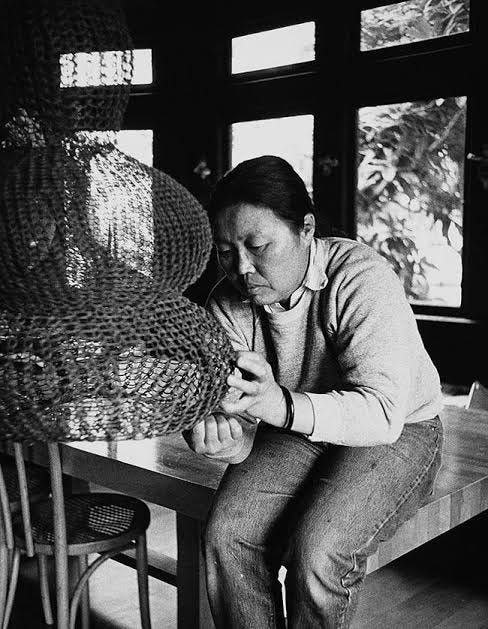
About the same time that I found Ruth, I happened to be losing myself, so to speak. Hauser & Wirth showed her looped sculptures in 2016 and the year before that I had had my first baby. Pregnancy came on unexpectedly, I decided to go for it, and at 29, suddenly everything was different. I’d been touring, playing music, recording music, and moonlighting at different publications throughout, all of which came to a surprising (to me), jolting stop. My friends went on vacation without me, assuming, probably rightfully so, that I couldn’t go. Uncomfortable in my new body, I only wore black for a time—I called my new look “mom goth”—and later, I bleached my hair a near-white platinum. Figuring out how to be me and a mom at the same time was a perplexing, unsolvable puzzle I attempted daily.


Something uncanny, of late, has been the convergence of that particular moment in the past month or so. All the same themes, but in a new context. It feels like an internet eternity ago, but fairly recently, people—seemingly out of nowhere—started posting photos from 2016. I looked at the photos and was instantly there again.
I used to really melt down about time (I still do, but less so)—the way little kids really seem to rob you of it. It’s a cause of endless frustration and a battle for autonomy that is constantly raging, even when separation isn’t even really what you want. A couple summers ago, I was mid-rage when Jesse said, What if you invited them into what you are doing? Involve them in your creativity? It was a pretty profound thing to say to me, especially then, and I think that question has a lot to do with my ongoing questions around art, regular-ass living, obligations and responsibility, dirty dishes, half-written manuscripts, schedules, literal and figurative space, fluidity and how the whole thing fits into a life lived well and with creativity.
These questions, which now I can see have been circulating for a whole decade, are why I’m magnetized to books like The Farm at Black Mountain College, which I picked up last spring and read over the summer. A collectively-managed subsistence farm at an experimental art school? Truly there does not exist a more potent catnip for me. As I was reading along, of course, there was Ruth again. As a child, before her family had been interned in a Japanese camp in New Mexico and Arkansas, Asawa’s family had a family farm in Southern California and so she’d come to the school already a skilled grower. She’d been learning at Milwalkee Teachers College, but left when the school wouldn’t award her a degree due to her race. But Black Mountain would; so she moved down the North Carolina and, between farm shifts, studied under and became mentee to Joseph Albers. Black Mountain’s pedagogy of collective work not only in support of the creative, but almost as the fuel for it, must have had a profound impact on Asawa, who wrote “there is no separation between studying, performing the daily chores of living, and creating one’s work.”
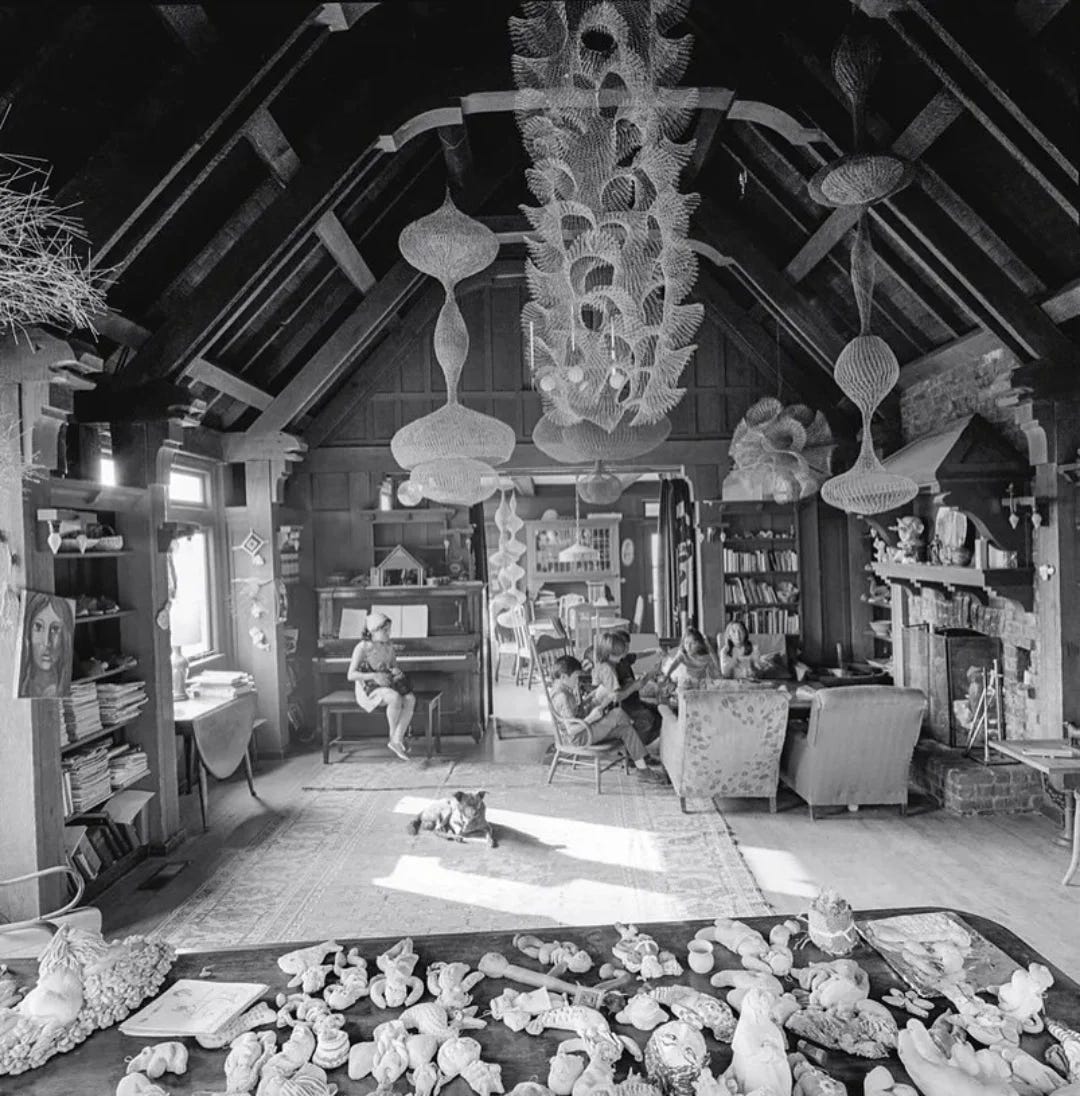
I was starting to get an idea of just how cool Ruth Asawa was, beyond just liking her best-known works. Then, I saw there’d be a retrospective at MoMa in the fall, exactly when we’d be in the city. Jesse and I met some friends and walked the exhibit, greedily feasting, frankly, on the rich offerings from Asawa’s brain and hands. I was fresh off an interview with friend and Maine artist Christopher Ryan (read it here) about managing the creative in tandem with messy life moments and so, when I turned a corner into the room all about Ruth’s art and domestic life and read the below, I was absolutely floored.
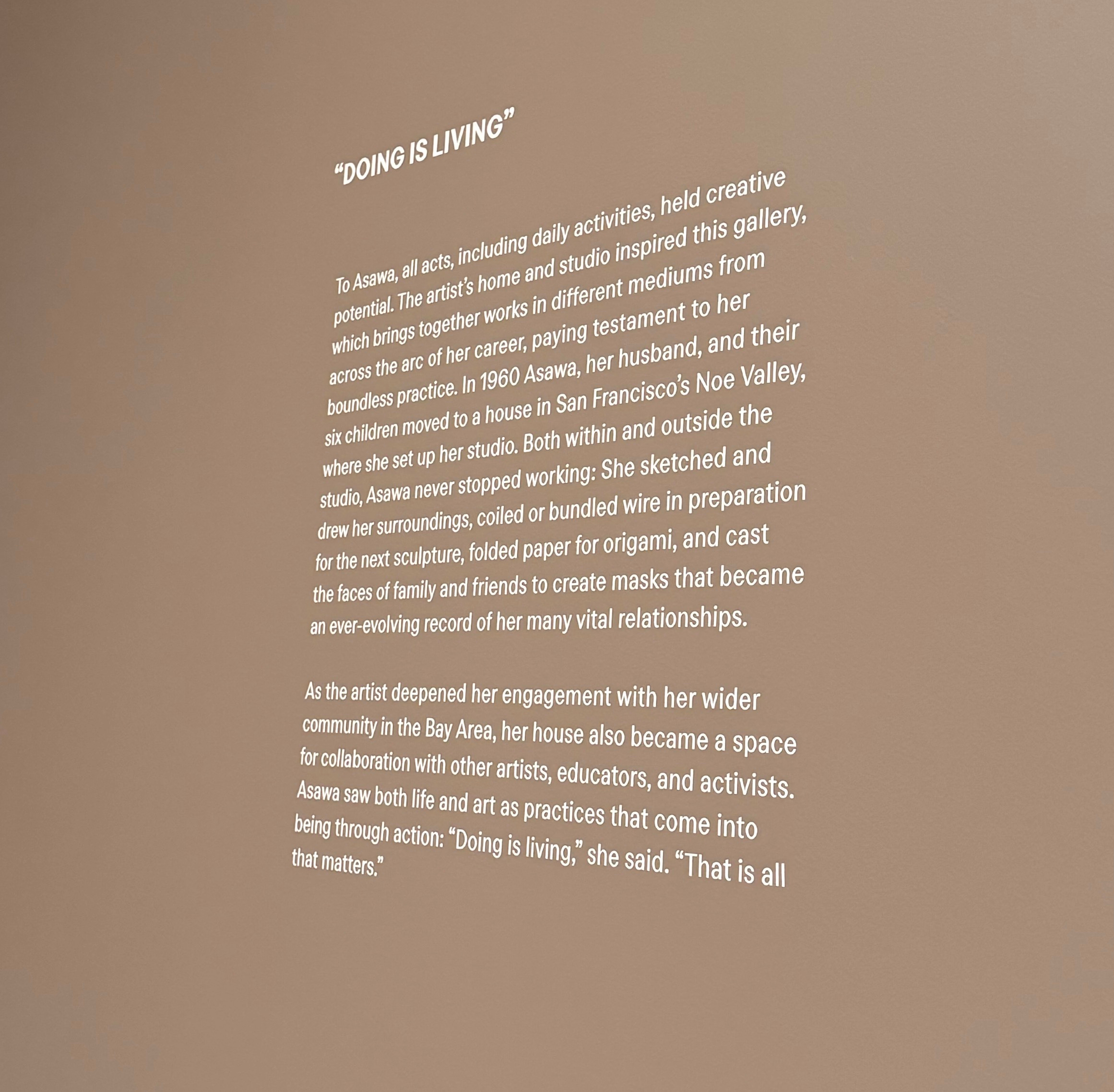
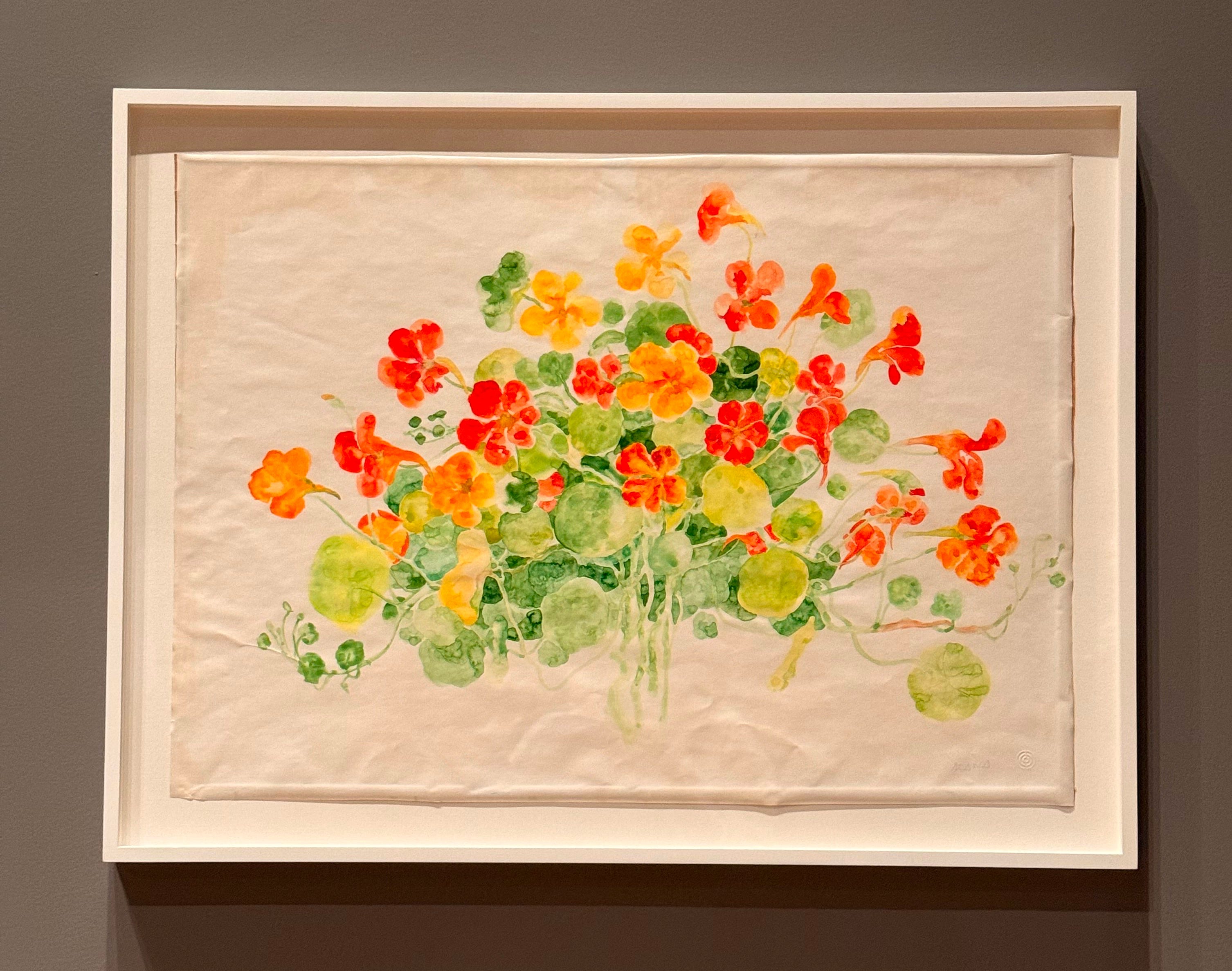
In this gallery, I learned about Asawa’s six children, her home studio in Noe Valley in San Francisco, her absolute devotion to her community, refusal to move to New York to advance her career, the public school arts program that she and other local mother-artists started, and her ability to put it all together into a cohesive whole. They showed the wooden doors Asawa and her children carved for their home’s front entry. There were some of the dozens of cast masks Asawa made of friends, neighbors, family, and visitors, which adorned one side of the house. There were sketches and paintings made, I assume, in between moments: ink drawings of a baby hand; water colors of backyard nasturtiums.
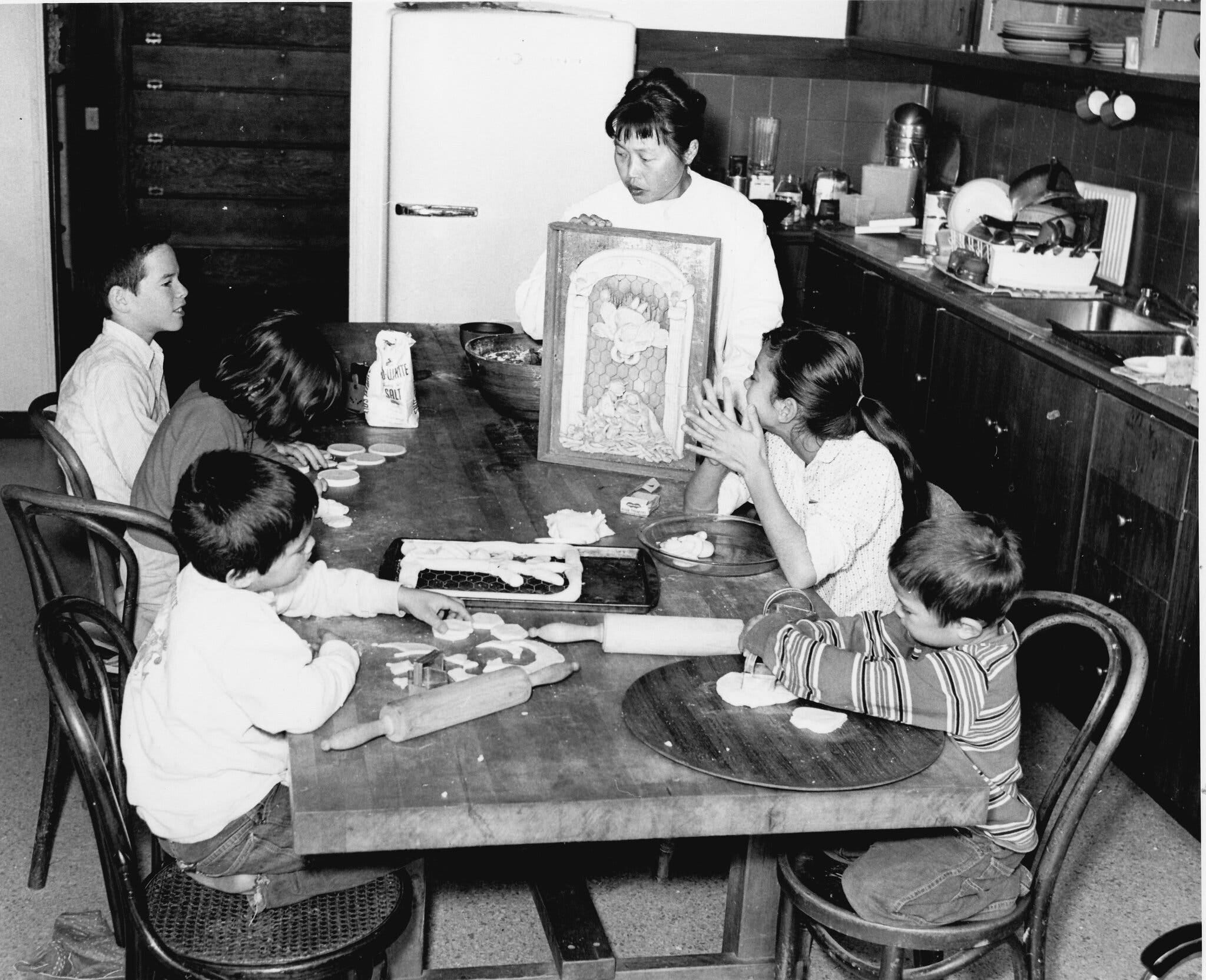
The next gallery was all about the Alvarado School Arts Workshop, the program she and others started for arts education at their public school and which they eventually brought throughout San Francisco. This one really wound me up, especially the connection between a simple non-toxic baker’s dough Asawa would frequently mix and how that became the medium for her massive public fountain in Union Square, San Francisco. (Unrelated, but Asawa was also really blasé about naming her work. Most of her output is just “Untitled.” She rules.)
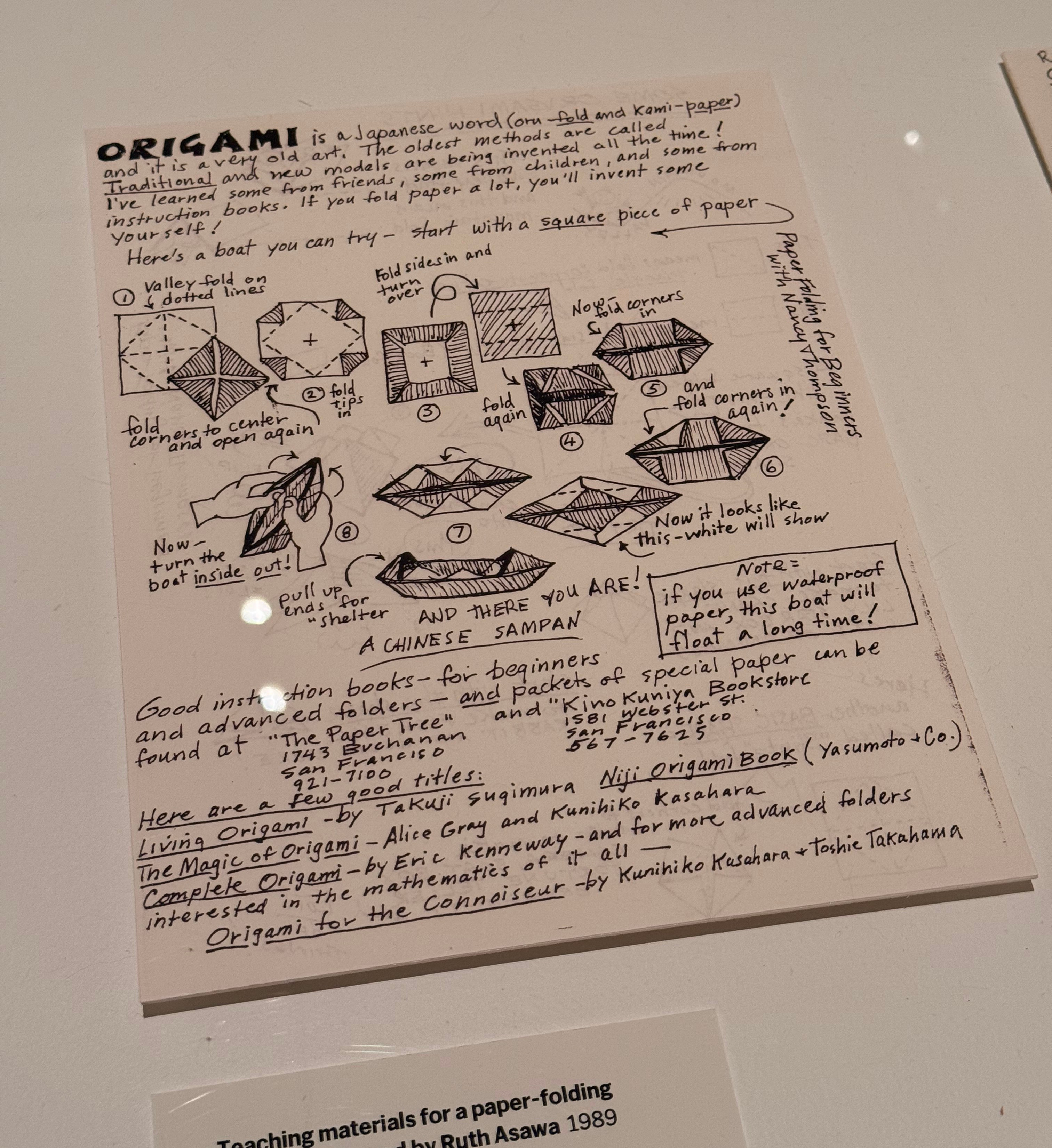
Shortly after our visit to New York, and most likely noticing a fixation growing, Jesse got me the book Ruth Asawa and the Artist-Mother At Mid Century. In the introduction, author Jordan Troeller writes, “To portray an artist’s identity as not simply coincident with her motherhood, but dependent upon it, was very unheard of in mid century America. This was an era when the solitary male artist…dominated public perception. Although many women who made art also indeed had children, few allowed themselves to be identified with this role.” But Asawa lived in both realms, happily and on purpose. She herself is quoted as saying, “My need to be an artist does not exceed my desire to be a parent, and also to be part of a community.”
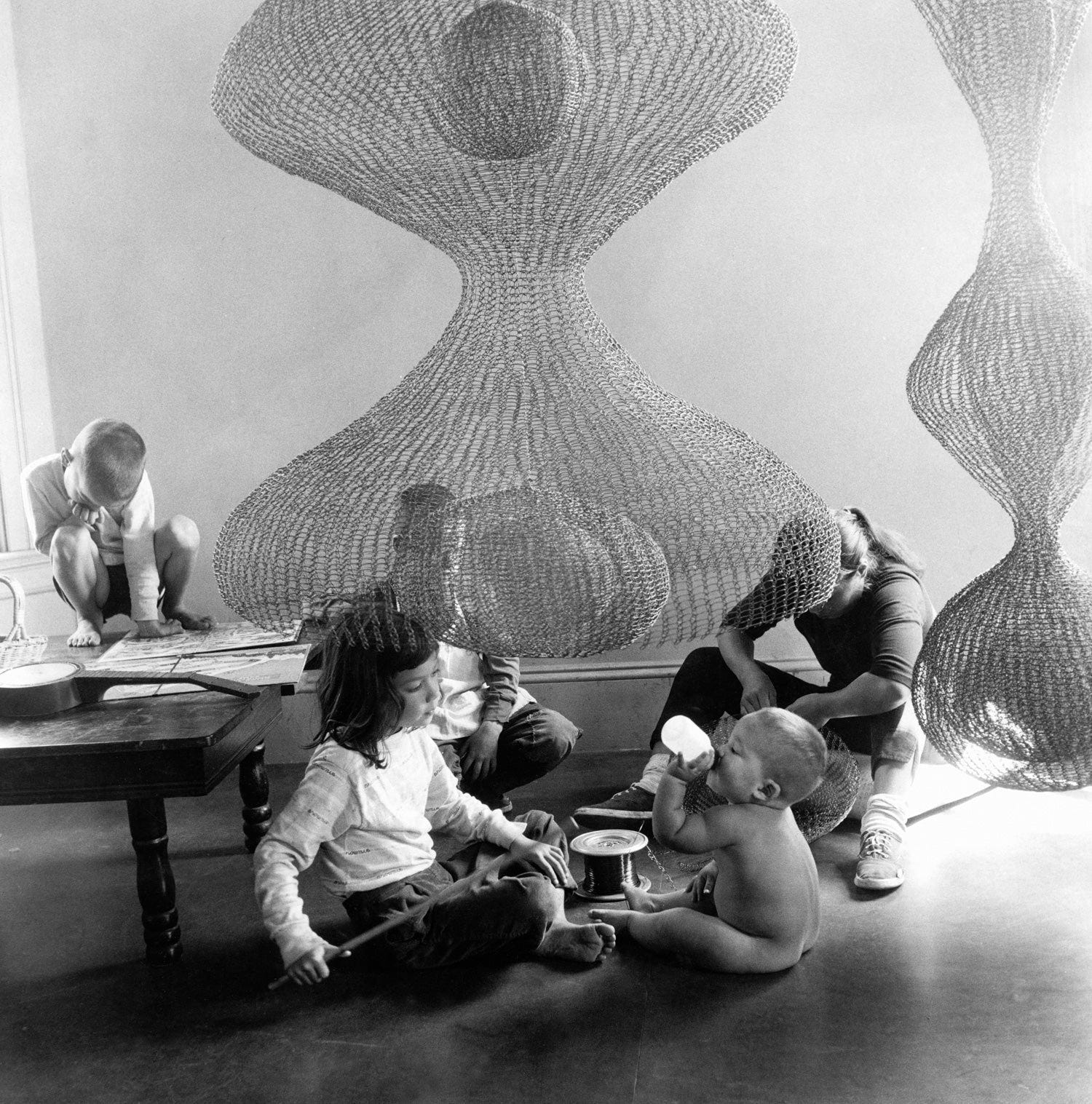
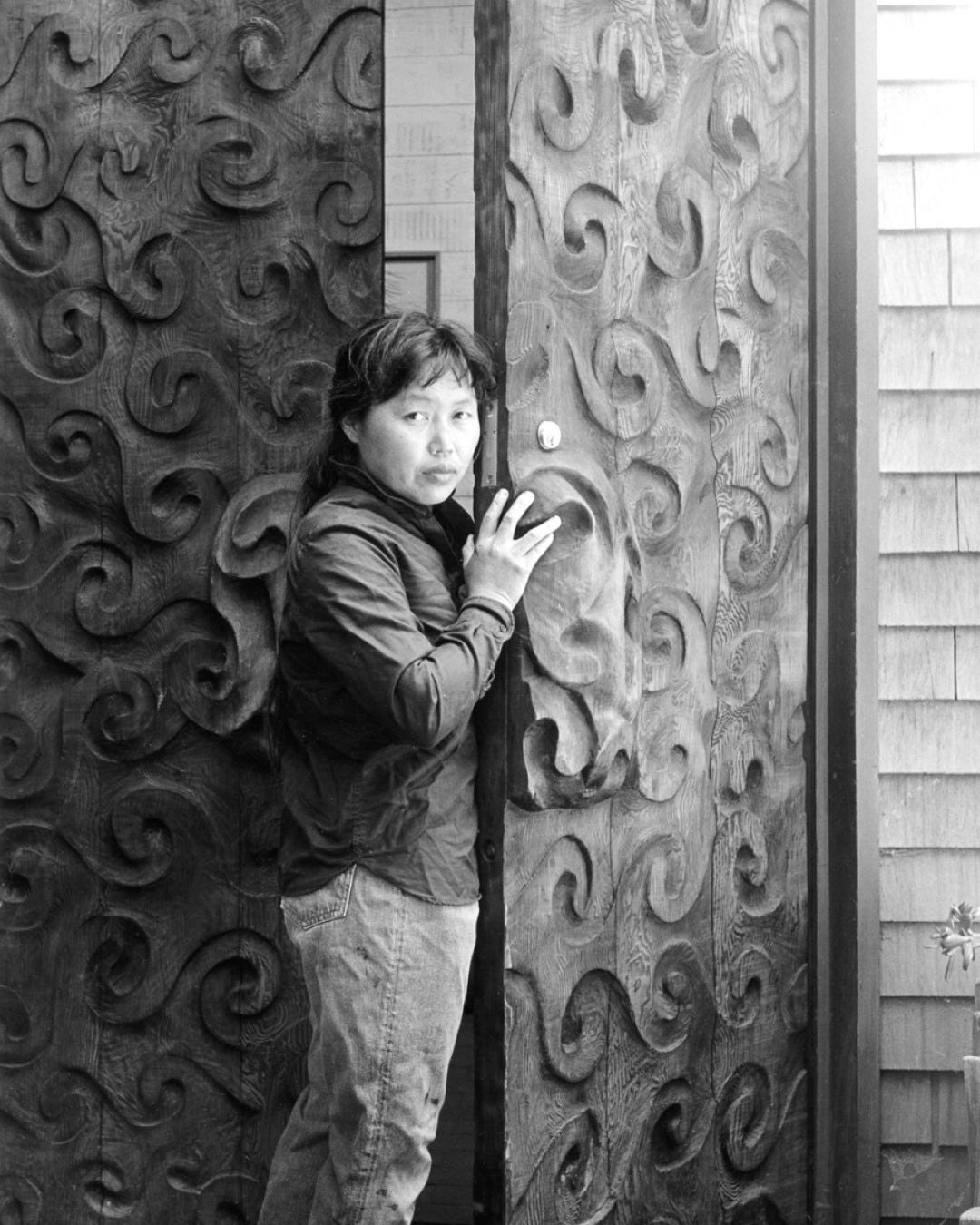
Asawa always did her work at home and with the children around. She did have dedicated studio space at home in Noe Valley, but her work tended to happen throughout the house. From a magazine article and the book:
“Since she does all of her work at home, the pieces, as she herself says, ‘clutter’ the whole house. At the same time she can keep an eye on her three sons and two daughters, the oldest nine years, the youngest not quite a year old.” This was an artistic practice made to be continuous with maternal labor, a space in which “coils of wire, childish drawings, and puppets are constantly underfoot,” observed the journalist. This continuum characterized not only the studio space, but the making of the artwork itself, as Asawa recounted the construction of puppet theaters with her children alongside the making of her pieces for art exhibition, and her daughter Aiko experimenting with the same looped-wire technique that Asawa used to create her sculptures.
In my interview with CDR, he’d said, “You’re still doing what you were doing before, but the weather’s different. You’re still thinking creatively, because that’s how you’ve always thought. The way you were doing it and the context you needed has changed.” Almost in conversation, Asawa herself is quoted as saying, “When you put a seed in the ground, the ground doesn’t say, well, in eight hours I’m going to stop growing. You put it in the soil and that bulb grows every second that it is attached to the earth. I think that every minute that we’re attached to this earth, we should be doing something.” Would that any of this wisdom had crossed my line of sight in 2016! Creation and creating as an ongoing, cumulative, and natural process fundamental to living itself! Not a separation into two beings, old and new, but a daily interplay as one.
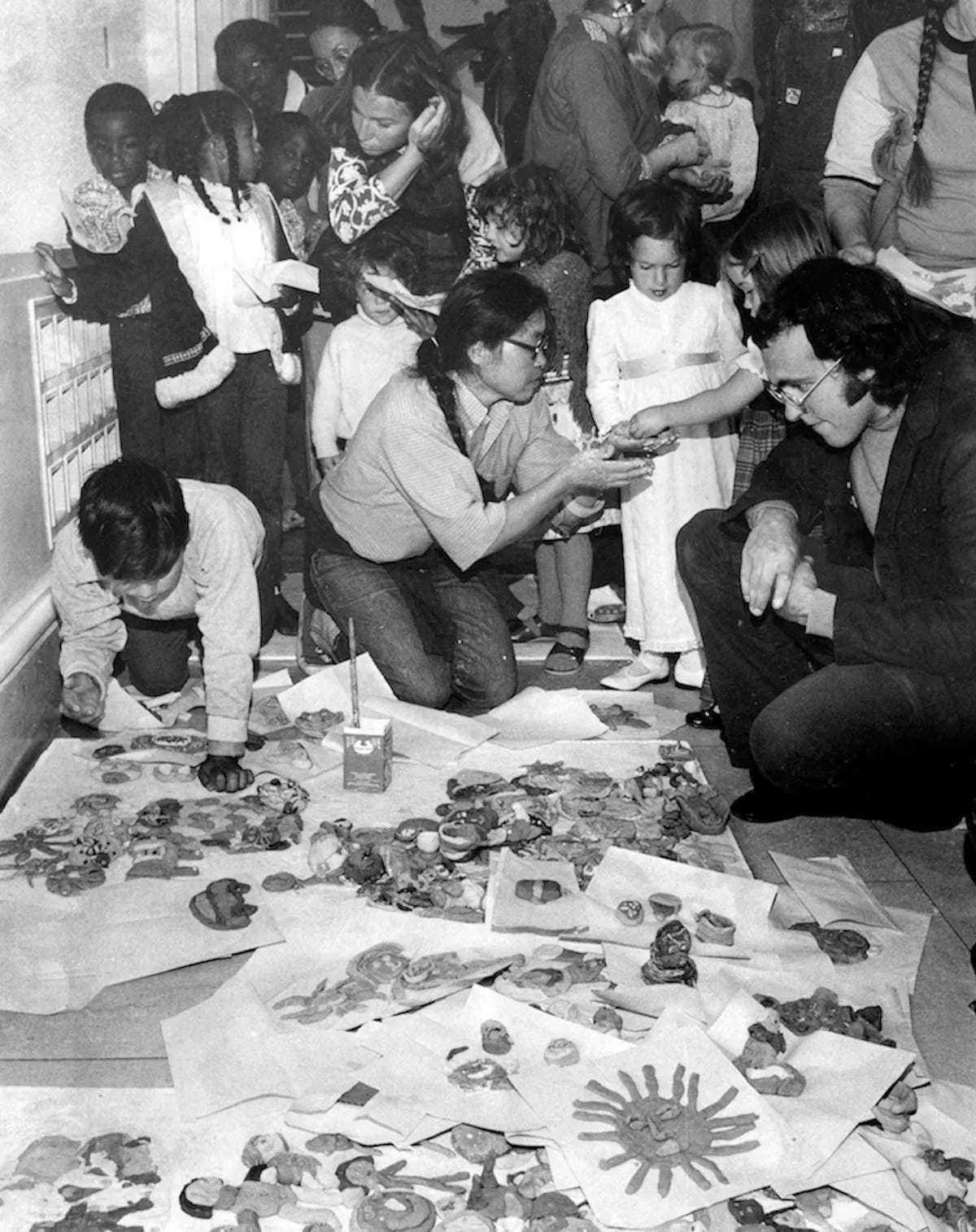
It’s subtle or maybe I just couldn’t see it then, I wasn’t attuned to it yet. The exhibition from Hauser & Wirth describes the works in the Abstract Sculpture show as exploring “contingency, imperfection, and unstructured play.” Asawa’s best known works, those wire looped sculptures, are meant to move with the passing of wind and shifts in the atmosphere around them—a useful and again profound metaphor for working (from home) artist-mothers. In fact, from the book and in reference to San Fransisco, we learn that the thousands of salt dough figures which were eventually cast in bronze and made up the larger, massive installation, were made with students, friends, family, visitors. It’s just so her: an artwork “by” Asawa, but created in connection, contingency, and collective with her community: “Because Ruth’s desire to show what many hands working together could do, neighbors and visitors to the Asawa home were encouraged to add to the collage. The process of making the panorama was a collaboration, with many ‘participatory artists’ including dozens of schoolchildren and neighborhood residents who helped make the figures. ‘The youngest person to contribute was three-year-old Mary Bylin from across the street; the oldest was the eighty-eight-year-old photographer Imogen Cunningham.’”
The artwork itself isn’t necessarily my main inspiration, personally (despite the fact that it does happen to be massive and wacky and brimming with details to discover). It’s the willingness to engage with contingency, the rejection of some sort of controlling narrative around selfhood and the artist/protagonist, and, in all of that, just the pure joy of being together in creativity. In Asawa’s world, working with the relationality and imperfections not only make life better, but they make the art better, too.



Loved this.
What a gift the timing of this is! I’m due to give birth to my first (literally tomorrow), and have wrestling with the fear of drifting away from my creative practices and aspirations as I cross this threshold into parenthood.
Thank you Zinzi and thank you Ruth for the invitation to let go of that fear and imagine other ways of being :)